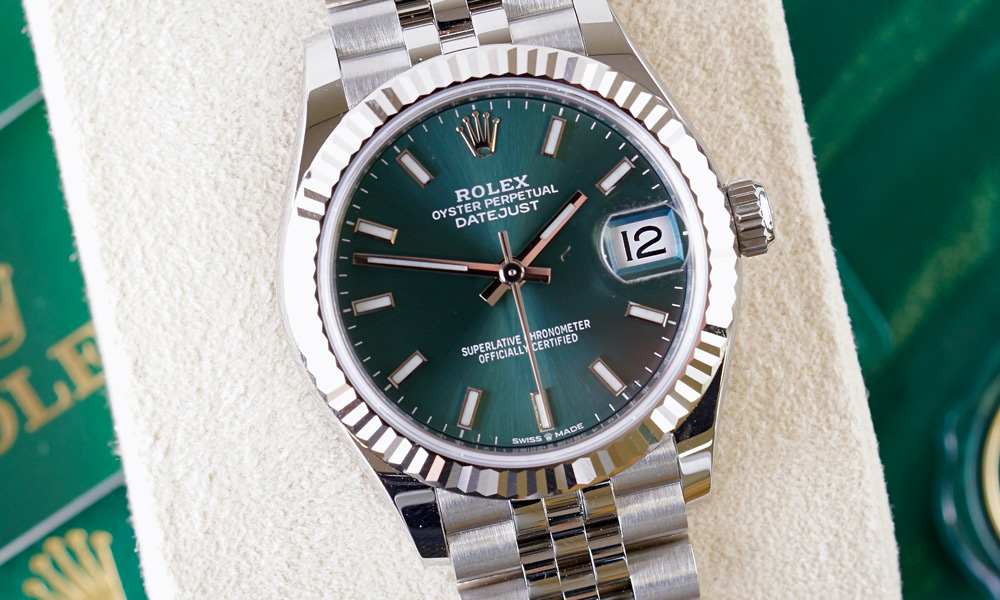
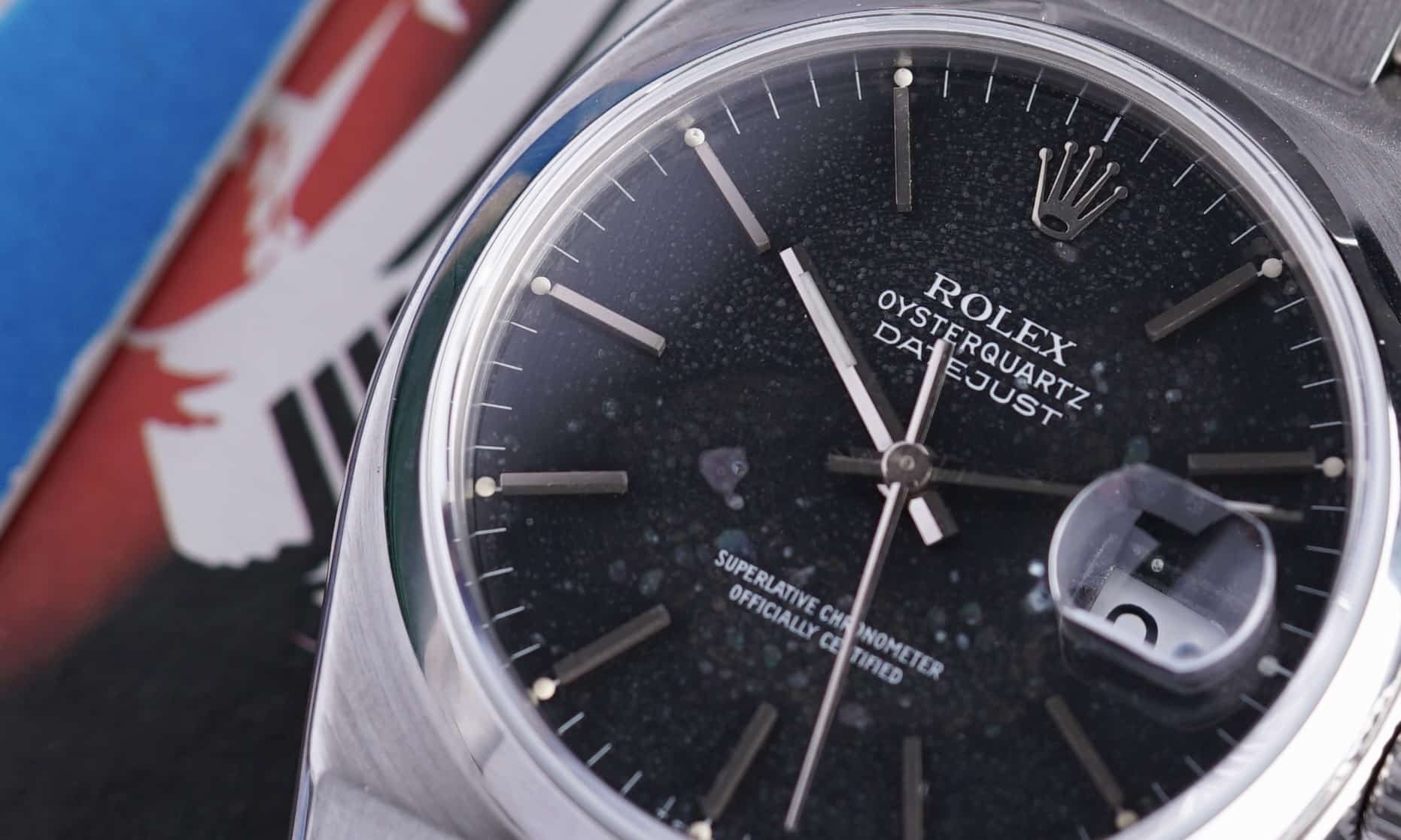
In the world of vintage Rolex collecting, perfection isn’t always the goal. While modern luxury watches are celebrated for their flawless finishes and pristine conditions, vintage timepieces tell a different story, one written in sun-faded bezels, creamy lume plots, and beautifully aged dials. This natural transformation, known as patina, has become one of the most sought-after characteristics among serious collectors.
But what exactly makes these “imperfections” so desirable? Why would a faded dial command a higher price than its perfectly preserved counterpart? In this comprehensive guide, we’ll explore the fascinating world of patina on vintage Rolex watches and discover why these signs of age have become treasured features rather than flaws.
What Is Patina in Luxury Watches?
Patina refers to the natural aging process that occurs in watches over decades of wear and environmental exposure. Unlike damage or neglect, patina develops gradually through legitimate use, creating unique characteristics that cannot be replicated or artificially recreated with any authenticity.
In the context of vintage Rolex watches, patina encompasses various forms of aging, from color changes in dials and bezels to the warm transformation of luminous material. Each piece develops its own distinctive character, making every patinated watch genuinely one-of-a-kind.
Think of patina as the watch equivalent of a fine wine’s aging process. Just as time transforms grapes into something more complex and valuable, decades of existence transform a Rolex into something with deeper character and story.
How Patina Develops: The Science of Aging
Understanding how patina forms helps explain why collectors value it so highly. Several environmental factors contribute to this natural aging process:
Sunlight and UV Exposure
Perhaps the most significant factor in patina development is ultraviolet light exposure. Over years and decades, sunlight gradually breaks down the chemical compounds in dial paint, bezel inserts, and luminous material. This process creates the warm, honey-colored tones that collectors prize in vintage pieces.
Humidity and Moisture
Even water-resistant watches experience some interaction with humidity over extended periods. This moisture, combined with temperature fluctuations, can cause subtle oxidation and color changes throughout the watch’s components.
Oxidation and Chemical Reactions
The materials used in vintage Rolex watches, including tritium luminous compound, aluminum bezel inserts, and various dial paints, all undergo gradual oxidation. These chemical reactions are responsible for the beautiful color transformations that distinguish vintage pieces from their modern counterparts.
Environmental Exposure
Everyday factors like air quality, skin contact, and general atmospheric conditions contribute to each watch’s unique aging pattern. A watch worn daily by a sailor in the Caribbean will develop a different patina than one worn by an office worker in London.
Types of Patina Collectors Value Most
Not all patina is created equal. Certain types of aging have become particularly desirable among vintage Rolex enthusiasts:
Tropical Dials
Perhaps the most celebrated form of patina, tropical dials occur when the original black dial transforms into rich brown, chocolate, or even burgundy tones. This color change results from UV exposure and chemical degradation of the dial paint over many years.
Tropical dials are highly prized because they’re entirely natural and impossible to fake convincingly. A genuine tropical dial on a vintage Submariner (Reference 5513) or GMT-Master (Reference 1675) can add tens of thousands of dollars to the watch’s value.
Ghost Bezels and Faded Bezels
Vintage Rolex sport models featured aluminum bezel inserts that fade beautifully over time. A “ghost bezel” refers to an insert that has faded so dramatically that the original colors have nearly disappeared, leaving behind soft, ethereal tones.
The famous Pepsi bezel on the GMT-Master (Reference 16750), for example, can fade from deep red and blue to soft pink and gray-blue—a transformation that many collectors find far more attractive than the original vivid colors.
Spider Dials
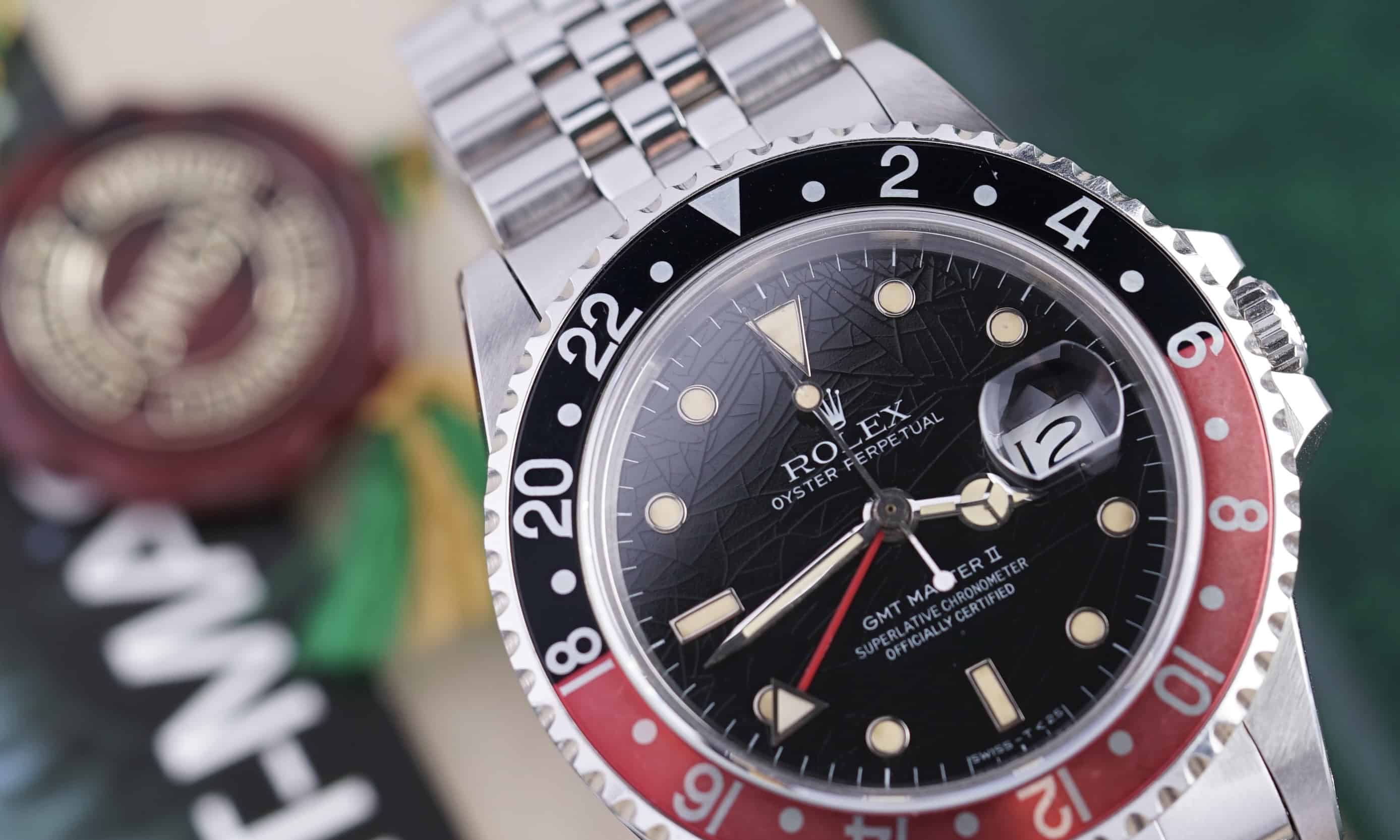
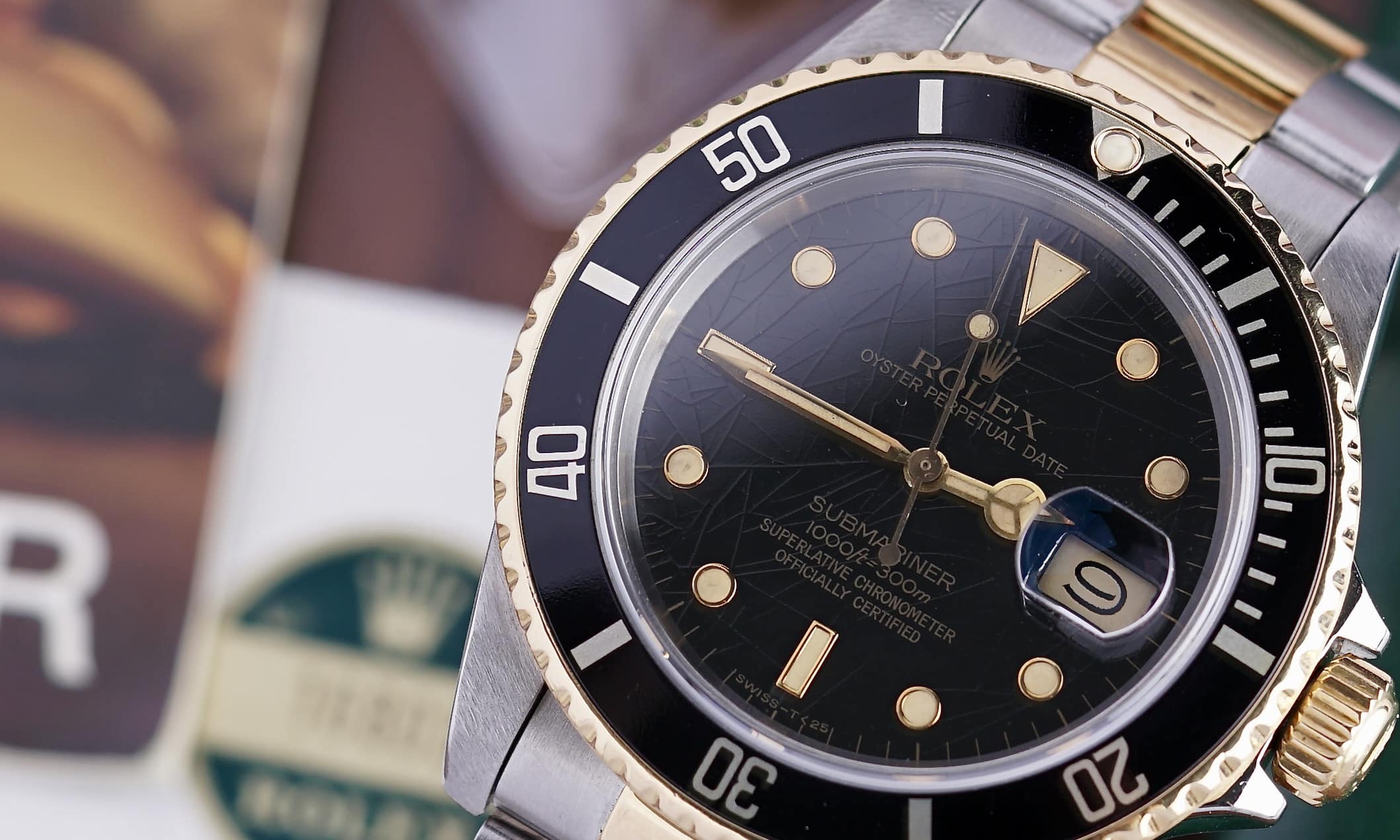
Spider dials feature a distinctive pattern of fine cracks across the dial surface, resembling a spider’s web. This cracking occurs when the lacquer coating on vintage dials contracts and expands differently from the underlying material over decades of temperature changes.
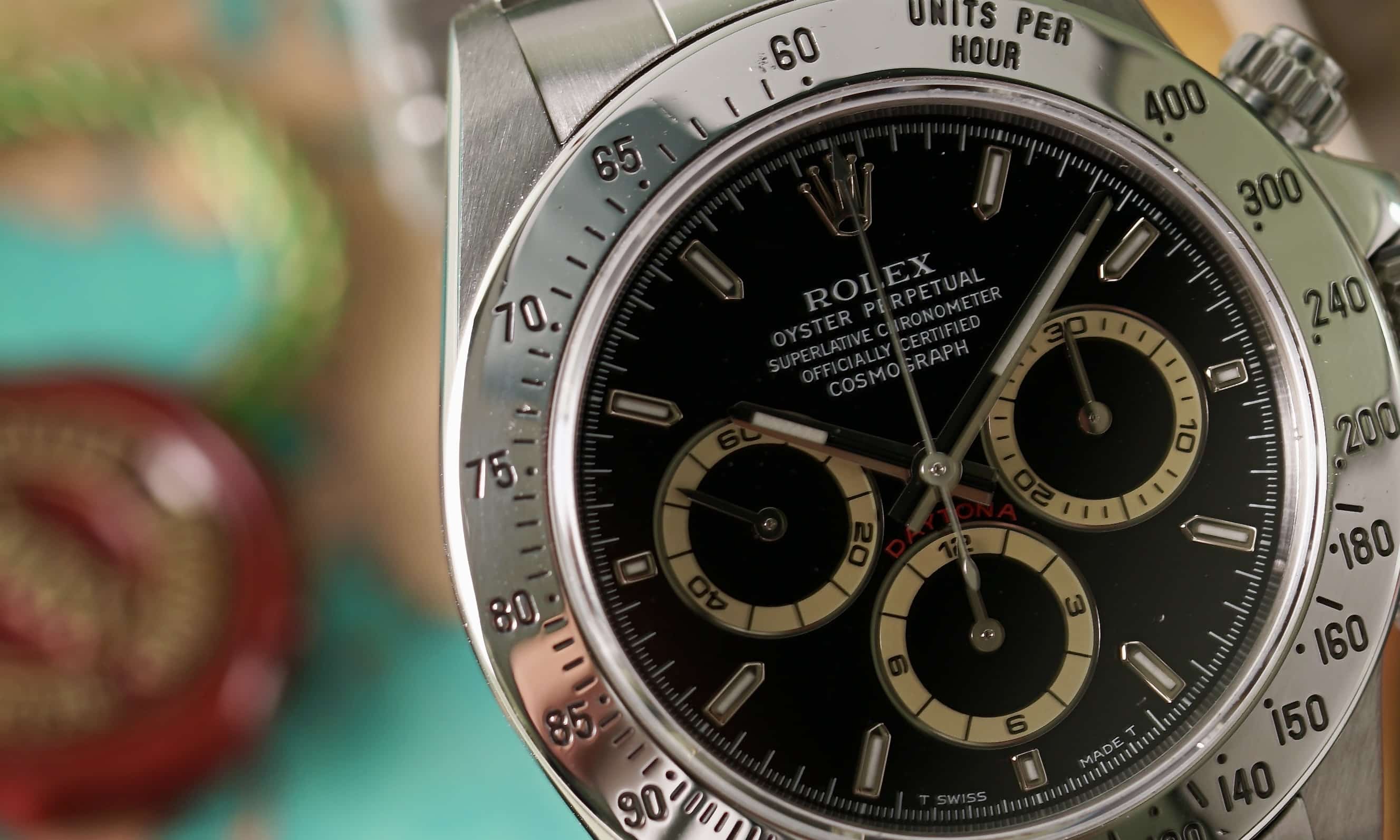
Far from being considered damaged, spider dials are now among the most collectible dial variations. A spider dial on a vintage Rolex Daytona or Day-Date, can significantly increase the watch’s desirability and value.
Creamy Lume Plots
Vintage Rolex watches used tritium-based luminous material on their hour markers and hands. Over time, this tritium oxidizes and transforms from stark white to warm cream, ivory, or even deep caramel tones.
This “creamy” appearance has become a hallmark of genuine vintage pieces. When the lume on both the dial and hands ages consistently, known as “matching patina,” it indicates the watch retains its original components, adding significantly to its collectibility.
Highly Collectible Rolex Models Where Patina Increases Value
While patina can enhance the appeal of any vintage Rolex, certain models are particularly sought-after for their aging characteristics:
Rolex Submariner (References 5512, 5513, 1680)
The Submariner is perhaps the most iconic canvas for beautiful patina. Tropical dials, faded bezels, and creamy lume plots on these references create some of the most valuable vintage sport watches in existence. A Reference 5513 with a fully tropical dial can command prices several times higher than an equivalent watch with a standard black dial.
Rolex GMT-Master (References 1675, 16750)
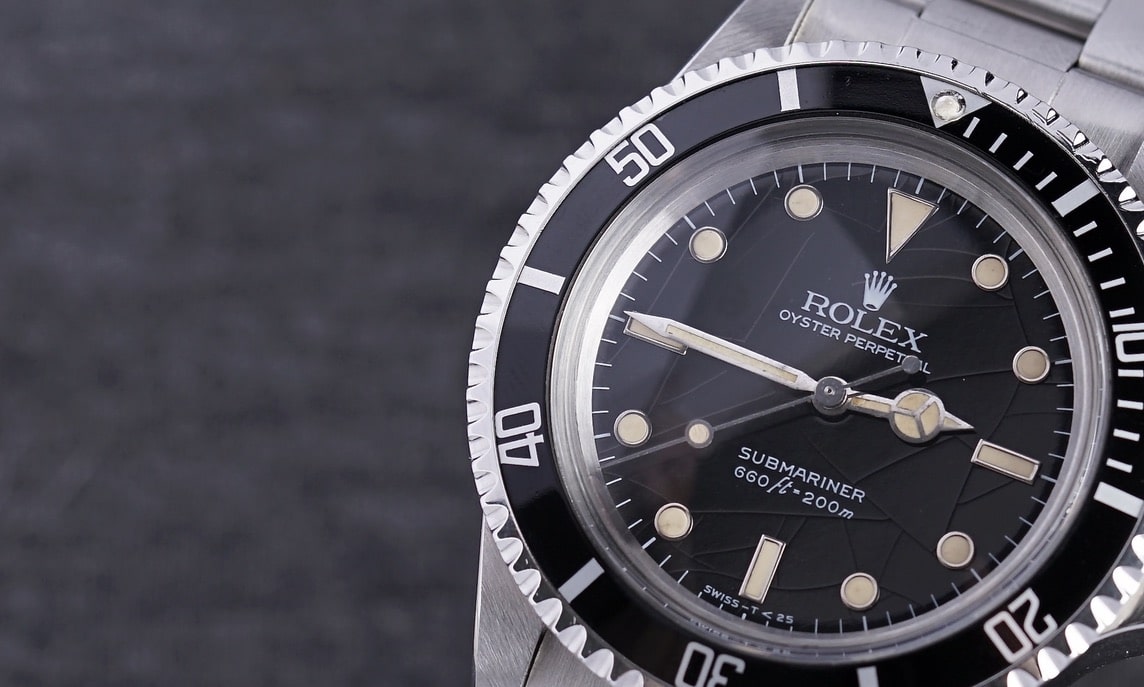
The GMT-Master’s colorful bezel inserts offer unique patina opportunities. Faded “Pepsi” (blue and red) and “Root Beer” (brown and gold) bezels have become collecting categories in their own right. Some faded color combinations are so desirable they’ve earned their own nicknames.
Rolex Daytona (References 6239, 6262, 6263)
Vintage manual-wind Daytonas with tropical dials or spider dial effects are among the most valuable watches in the world. Paul Newman owned a Reference 6239 “Paul Newman” Daytona that sold for over $17 million—and its patinated, aged dial was part of what made it so special.
Rolex Explorer (References 1016, 6610)
The Explorer’s clean, minimalist dial provides an excellent showcase for subtle patina development. Gilt dials with warm, honey-toned lume plots on these references are highly sought-after by collectors who appreciate understated elegance.
The Great Debate: Originality vs. Restoration
One of the most contentious topics in vintage watch collecting centers on whether to preserve patina or restore a watch to its original condition. This debate reveals fundamental differences in collecting philosophy.
The Case for Originality
Serious collectors typically prefer watches in completely original, unrestored condition, even if that means accepting imperfections. Here’s why:
- Authenticity: Patina proves the watch has lived a genuine life and retains its original components
- Rarity: You cannot recreate authentic patina; each patinated dial is truly unique
- Investment: Original-condition watches typically appreciate more than restored examples
- Historical integrity: An unrestored watch preserves its complete history
A vintage Submariner with its original, patinated dial will almost always be more valuable than the same model with a replacement dial, even if the replacement is a genuine Rolex service dial.
The Case for Restoration
Some collectors and wearers prefer their vintage Rolex watches to look as close to new as possible. Restoration can make sense when:
- The watch is intended primarily for wearing rather than collecting
- Damage (not patina) has significantly affected the dial or components
- The owner simply prefers the aesthetic of a pristine watch
However, it’s important to understand that restoration typically decreases a vintage watch’s collector value and should be approached with careful consideration.
Finding the Balance
Many collectors seek a middle ground, preserving original components while ensuring the watch remains mechanically sound. This often means servicing the movement while keeping the original dial, hands, and bezel intact, even if they show signs of age.
Why Untouched Vintage Watches Command Premium Prices
The preference for original, patinated watches isn’t merely aesthetic, it’s deeply connected to what makes vintage collecting meaningful:
Provenance and Story
Every scratch, every faded bezel, every creamy lume plot tells part of the watch’s story. An untouched vintage Rolex carries decades of history visible on its face. That Submariner with the tropical dial might have spent years on a diver’s wrist in the Mediterranean. The faded GMT-Master bezel might have seen countless international flights. This tangible connection to history is irreplaceable.
Scarcity and Authenticity
As more vintage watches get restored or “improved,” genuinely untouched examples become increasingly rare. This scarcity drives value among collectors who understand that you cannot manufacture authenticity.
Investment Potential
The vintage watch market has consistently shown that original-condition examples appreciate more significantly than their restored counterparts. For collectors viewing their purchases as investments, preserving originality is a financial imperative.
How to Evaluate Patina When Buying
If you’re interested in acquiring a vintage Rolex with beautiful patina, consider these factors:
Consistency
The best patinated watches show consistent aging across all components. Matching patina between the dial, hands, and other elements suggests originality and proper aging.
Character vs. Damage
Learn to distinguish between attractive patina and actual damage. A uniformly faded tropical dial is desirable; a dial with moisture damage or corrosion is not.
Documentation
When possible, seek watches with service history or provenance that supports their originality. This documentation adds confidence to your purchase.
Expert Authentication
Given the high values involved, always have significant vintage purchases authenticated by experts who can verify that the patina is genuine and the watch hasn’t been artificially aged or assembled from mismatched parts.
Conclusion: Embracing the Beauty of Time
Patina on vintage Rolex watches represents something rare in our modern world, evidence of genuine lived experience that cannot be bought, manufactured, or rushed. These “imperfections” are actually proof of authenticity, uniqueness, and history that make vintage watches so compelling to collectors.
Whether you’re drawn to the warm chocolate tones of a tropical Submariner dial, the ghostly fade of a vintage GMT-Master bezel, or the delicate crackle of a spider dial Daytona, understanding patina opens up a deeper appreciation for what makes vintage watches special.
When searching for your next vintage Rolex, consider that the most beautiful examples might not be the “perfect” ones, they might be the pieces that have gracefully embraced the passage of time. At Langedyk Vintage Watches, we specialize in finding these exceptional pieces where age has only added to their character and value.
Remember: in vintage Rolex collecting, patina isn’t a flaw to overlook, it’s character to celebrate.